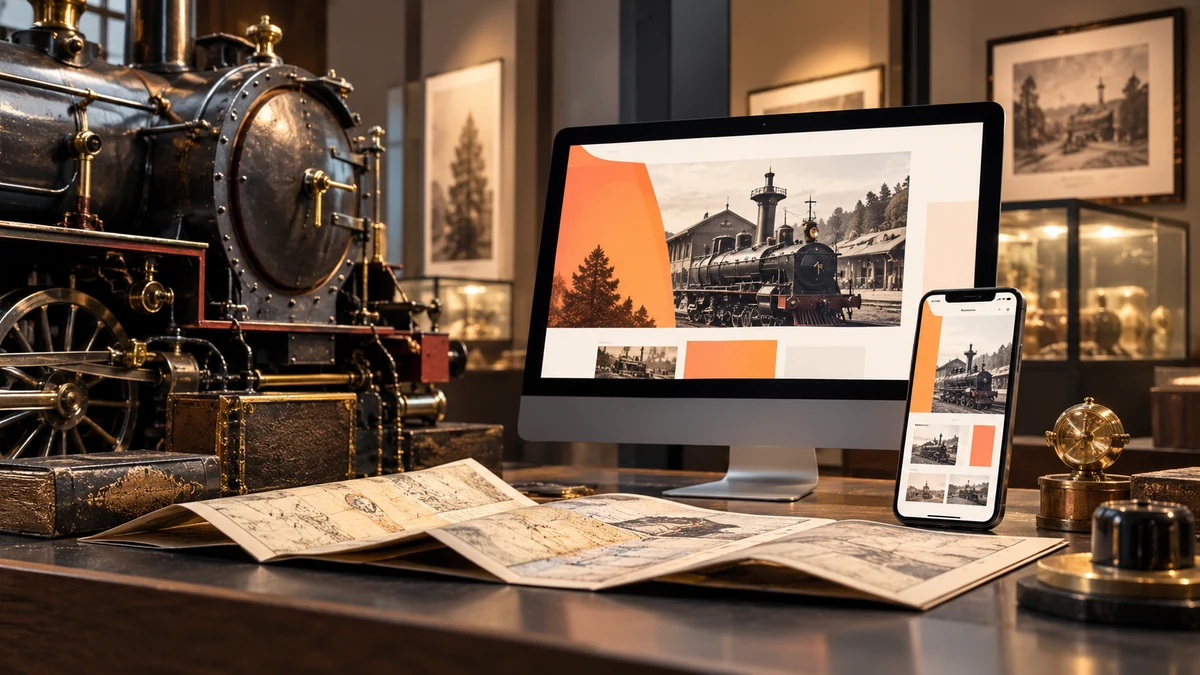
Museum website design in Mysore should answer practical visitor questions before unfolding the institution’s story. Mysuru Rail Museum shows how clear planning information, heritage-led content, responsive navigation and maintainable publishing can support confident visits and lasting digital discovery for everyone.
Planning a project? Explore Crisant’s website development service in Mysore →
Why this museum website design in Mysore was needed
A museum website serves people at very different moments. One visitor may be standing in Mysuru deciding what to do this afternoon. Another may be planning a school visit, researching railway history or exploring the collection from another country. The interface must answer immediate questions without reducing the institution to timings and directions.
Mysuru Rail Museum holds a substantial story. Its live website states that the museum was established in 1979 as India’s first regional railway museum and now spans nearly three acres. The published highlights include more than 125 exhibits, five narrow- and metre-gauge locomotives and the Maharani’s Saloon built in 1899. That depth needed a digital structure visitors could understand before and after a physical visit.
The requirement therefore combined practical service design and heritage communication. Crisant’s website development service in Mysore shaped the project around visitor readiness: make the essentials easy to find, create routes into the collection, and give the museum a maintainable platform for current events and information.
How the visitor journey was visualised
The railway museum website design begins with the questions that can decide whether someone visits: when the museum is open, where it is, what can be experienced and how to plan the journey. Once that foundation is clear, the interface can invite deeper exploration through the museum story, attractions, events, galleries and virtual tour.
This creates two connected speeds. The planning layer is concise and scannable for someone on a phone. The discovery layer is more immersive, allowing photographs, exhibit descriptions and railway timelines to carry the cultural experience. Visitors can move between those speeds without losing the main navigation or contact path.
| Visitor question | Website response | Experience purpose |
|---|---|---|
| Can I visit today? | Timings, closure information and current notices | Supports a confident decision |
| Where is the museum? | Address, map and access route | Reduces planning friction |
| What will I see? | Highlights, attractions and gallery routes | Builds interest before arrival |
| Can I explore remotely? | Virtual tour, stories, videos and e-brochure | Extends discovery beyond the campus |
| What is happening now? | Events and maintainable updates | Keeps operational information current |
Heritage storytelling without hiding visitor information
Heritage websites can become archives that are difficult to navigate, or tourism pages that flatten history into a few promotional lines. The Mysuru Rail Museum website avoids that choice by treating the collection and the visit as parts of the same journey. Practical information stays visible while exhibit stories provide reasons to continue exploring.
Photography carries much of the emotional work. Locomotives, coaches, insignias and museum spaces communicate scale and material character faster than decorative interface effects could. Headings and short introductions provide context, while dedicated attraction pages allow individual objects to receive more complete descriptions.
The live experience also gives the institution several content formats: event updates, an e-brochure, a virtual tour, galleries, videos and historical sections. This is useful tourism website development because it supports people who want to plan, learn, revisit or share—not only those ready to travel immediately.
How the responsive museum website was developed
The responsive museum website was structured around reusable publishing components for visitor notices, highlights, attractions, stories, events, galleries and contact information. Shared patterns keep the experience recognisable while allowing each exhibit or announcement to carry different imagery and detail.
Mobile behaviour was treated as a primary visitor condition. Someone may open the site while moving through Mysuru, using a smaller screen and a mobile connection. The hierarchy therefore keeps essential information and actions easy to scan, lets images resize without disrupting reading order and avoids forcing desktop navigation patterns into a narrow viewport.
Crisant’s project record also documents a CMS that the museum team can update without routine developer dependence. Maintainability matters because closures, timings, events and new digital material can change independently of the permanent collection. A visitor attraction website design is only useful when its operational layer remains current.
The result demonstrates responsive website development as more than screen resizing. Content priority, image rhythm, navigation depth and action placement all change with context, while the underlying publishing system keeps the institution’s material organised.
What the live project proves—and what it does not claim
The live Mysuru Rail Museum website provides direct evidence of its information architecture. Visitors can inspect the current notice area, location and timings, museum background, highlights, attractions, events, virtual tour, gallery, videos and contact routes. The external project link near the top of this article opens that developed site directly.
Crisant’s production case study adds documented design intent: answer visit-planning questions early, use photography for heritage storytelling, support mobile visitors and make content maintainable by the institution. Together, the two sources show both the delivered interface and the decisions behind it.
This article does not claim a rise in visitors, ticket revenue, search traffic or engagement. No approved analytics were supplied for those outcomes. The proof is the live content system, the responsive screens and the museum’s ability to publish current visitor material without turning the case study into an invented performance story.
Lessons for museums and experience-led attractions
Start with the visitor’s clock. Timings, closures, location, accessibility and contact details should not compete with the institutional introduction. Give urgent planning information a clear place, then let the collection earn attention through strong routes and useful context.
Design several depths of discovery. A first-time tourist may want highlights; a railway enthusiast may want detailed attraction pages; a remote visitor may prefer a virtual tour or video. One navigation system can support all three when overview, category and detail content have distinct roles.
Treat current information as a publishing responsibility, not a one-time launch task. Events, special hours and notices need a workflow the team can use. Permanent heritage content and changing operational content should share a visual language but remain easy to update independently.
Finally, evaluate the mobile experience in a real visitor context. If your museum, gallery, heritage site or attraction needs clearer planning and deeper digital storytelling, request a free growth audit from a website development company in Mysore before choosing a template or rebuilding isolated pages.
A useful culture or visitor-attraction website starts by separating urgent planning information from the deeper story people may want to explore. Crisant can map that hierarchy, design the visual system and develop a responsive publishing experience around the institution’s real content.
Request a visitor-website review →